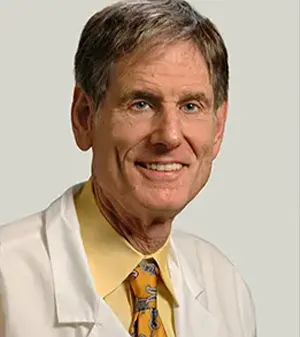
Ralph R. Weichselbaum has devoted his career to translational medicine and improving treatment outcomes for cancer patients. While a faculty member at Harvard in the 1970s and 1980s, he helped to define the molecular
basis of potentially lethal radiation damage (Nature 1978) and the role of this type of DNA repair in radiotherapy (IJROBP 1984). In collaboration with Barbara McNeil and Steve Pauker, he applied utility theory
to analyze patient treatment choices in lung cancer and head and neck cancer therapy (NEJM 1978, 1979, 1981).
While in Boston, Weichselbaum and colleagues in medical oncology at the Dana Farber pioneered the integration of chemotherapy and radiotherapy in advanced head and neck cancer, studies which continued at The University of
Chicago with Everett Vokes (NEJM 1993). In the late 1980s and early 1990s, the Weichselbaum laboratory investigated basic signal transduction mechanisms in mammalian cells following ionizing radiation exposure (Nature
1995; PNAS 1996; Nature 1996; Nature 1997), and in separate studies investigated mechanisms of radiation resistance/sensitivity mediated by cytokines in tumors (PNAS 1989, 1994), thus conceiving "genetic radiotherapy."
In this transcriptional targeting gene therapy paradigm, radiation activates DNA sequences from a radio (or chemo) inducible promoter, in this case the CArG elements from the Egr-1 gene which are cloned upstream of a cDNA for a
toxin (TNFα), commercialized as TNFerade (GenVec) (Nat Med 1995). Weichselbaum was one of the first investigators to use anti-angiogenic agents with radiotherapy (Nature 1998; Cancer Res 1998).
Dr. Samuel Hellman and Weichselbaum first suggested in 1995 that metastases limited in number and location – “oligometastasis” – are curable with ablative therapies (JCO 1995). They conducted the first clinical trial of stereotactic body radiotherapy in an oligometastatic setting with long-term cures (Cancer 2012). Using microRNA technology, they have been able to distinguish oligometastasis from more widespread disease, thus allowing curative regional therapy to be administered to those patients with limited oligometastatic disease (PLOS One 2011, 2012; JCO 2018). This is a paradigm shift in the consideration of metastases. Most recently, an integrated analysis of oligometastatic liver metastasis from colorectal cancer patients has clearly identified patients with true oligometastatic disease (Nat Commun 2018).
Based on the ablative radiotherapy doses used in oligometastasis trials, Weichselbaum and collaborator Dr. Yang-Xin Fu embarked on experiments using ablative radiotherapy doses in mice. They demonstrated that following high-dose radiation, CD8+ T cells are required for optimal tumor control, and that ablative radiation primes T cells, and induces maturation and increases function of professional antigen presenting cells (dendritic cells) (Blood 2009). Weichselbaum and Fu demonstrated that Type 1 interferon signaling is required for radiation to be effective.
As part of their effort to investigate and characterize molecular pathways related to tumor resistance to radiotherapy, they have focused on the role of the cGAS/STING axis, a DNA sensor (in antigen presenting cells), in radiationinduced
effects (Immunity 2014; 2018). The overall translational importance of this work is that local tumor control by radiotherapy is governed by host immune responses as well as the DNA repair capacity of tumor cells, which had been considered the dominant determinant of successful treatment in radiotherapy (Nat Rev Clin Oncol 2017).
These studies opened new avenues for exploration of improving the therapeutic ratio in radiotherapy. Their collaborative work has demonstrated that radiation induces PD-L1 and that blockade of the PD-L1 ligand for the checkpoint inhibitor PD-1 increases both the local and “abscopal” effects of radiotherapy through increasing T-cell killing of tumor cells (JCI 2014). These investigations are widely cited and the basis of many ongoing and planned clinical investigations of ablative radiotherapy with immune checkpoint inhibitors. Weichselbaum is the founding Chairman of the Department of Radiation and Cellular Oncology at The University of Chicago and is Co-Director of the Ludwig Center for Metastasis Research. He was an editor of Cancer Medicine, the oldest oncology textbook. He was a contributor to the National Academies Appropriate Use of Advanced Technologies for Radiation Therapy and Surgery in Oncology (National Academies Press 2015), and has authored over 750 peer-reviewed articles and over 100 book chapters.
Honors
1997 Member, Institute of Medicine (IOM), National Academy of Medicine
1998 John B. Little Lecture Award, Harvard University
1998 Glenn Sheline Lecturer, University of California, San Francisco
1998 Lecturer, L Academie des Sciences de institut de France, Paris, France
1998 Keynote Lecturer: King Gustaf’s V Jubilee, Stockholm, Sweden
2004 Copeland Lecturer, The University of Texas M.D. Anderson Cancer Center, Houston, Texas
2004 Simon Kramer Lectureship, Thomas Jefferson University, Philadelphia, PA
2005 Member, Association of American Physicians
2010 Tolmach Lecturer, Washington University, St. Louis, MO
2011-2014 Member, National Cancer Policy Forum (NCPF), Institute of Medicine (IOM)
2014 Gilbert H. Fletcher Lecture, ICTR-PHE, Geneva, Switzerland
2014 James R. Oleson Professorship Lecture, Duke University, Durham, North Carolina
2018 American Society of Clinical Oncology, David A. Karnofsky Memorial Award and Lecture
2018 Gold Medal, American Society of Therapeutic Radiology and Oncology
2019 Franz J. Buschke Lecture, University of California – San Francisco, San Francisco, CA